![CSS-CMYK-logo-2015-2.png]](https://go.christiansteven.com/hs-fs/hubfs/social-suggested-images/CSS-CMYK-logo-2015-2.png?height=40&name=CSS-CMYK-logo-2015-2.png)
Applies to
This article applies to the PBRS Scheduling Service and schedules managed by PBRS.
Before you begin
Before changing the PBRS Scheduling Service configuration, review the current settings and consider how the changes may affect schedules that are already running automatically.
- Make sure you have the appropriate permissions to configure the PBRS Scheduling Service.
- Review the existing scheduler configuration before making changes.
- Consider whether the changes could affect schedules that are currently enabled.
- If you are changing service-related settings, make sure you have the appropriate Windows permissions to manage the PBRS service.
- Plan significant configuration changes for a time when interrupting automatic schedule execution will have the least impact.
Important: Scheduling Service settings can affect the execution of multiple PBRS schedules. Avoid changing settings in a production environment without first understanding how the change will affect existing schedules.
Open the Scheduling Service configuration
Open the PBRS Scheduling Service configuration to review and manage how PBRS processes scheduled reports and automated tasks.

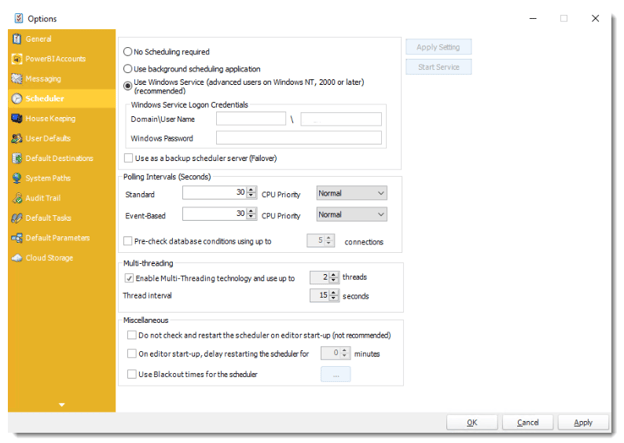
Configure the Scheduler
Use the Scheduler settings in PBRS Options to choose how PBRS processes schedules and configure scheduler performance, failover, polling, multithreading, and other scheduler behavior.
- Open PBRS Options.
- Select Scheduler.
- Select the scheduling method you want PBRS to use.
| Option | Use when |
|---|---|
| No Scheduling required | You want to use PBRS without automatic scheduling and execute schedules manually. This option can also be used to uninstall an existing scheduling service. |
| Use background scheduling application | You want PBRS to process schedules using the background scheduling application. |
| Use Windows Service (advanced users on Windows NT, 2000 or later) (recommended) | You want PBRS to process schedules using the Windows Service. PBRS identifies this as the recommended scheduling method. |
No Scheduling required
Select No Scheduling required if you want to use PBRS as an ad-hoc report management tool without automatically executing schedules. When this option is selected, PBRS does not automatically process schedules, so you must execute each schedule manually when required.
You can also use No Scheduling required to uninstall a previously installed PBRS scheduling service.
Important: Selecting No Scheduling required does not mean that you cannot create or use schedules in PBRS. It disables automatic schedule processing. To run a schedule, select the schedule and use Execute.
Configure No Scheduling required
To configure PBRS without automated scheduling:
- Open PBRS Options.
- Select Scheduler.
- Select No Scheduling required.
- Apply the setting to disable automatic scheduling.
Remove an installed scheduling service
If PBRS was previously configured to use a scheduling service, selecting No Scheduling required can be used to uninstall that service. After removing the service, schedules remain available in PBRS but no longer execute automatically.
Use background scheduling application
Configure background scheduling application
Select Use background scheduling application to run the PBRS scheduler as a background application instead of as a Windows Service. Use this option when you want PBRS to process schedules automatically without installing the PBRS Scheduling Service as a Windows Service.
When the background scheduling application is running, PBRS monitors enabled schedules and executes them according to their configured schedule settings.
- Open PBRS Options.
- Select Scheduler.
- Select Use background scheduling application.
- Configure the required scheduler settings.
- Select Apply Setting to apply the scheduler configuration.
- Confirm that the background scheduling application is running before relying on PBRS to execute schedules automatically.
Important: The background scheduler runs as an application independently of the PBRS application. However, it runs within the logged-in Windows user session. If the user logs off or the server is shut down, the background scheduler stops and PBRS will not automatically execute schedules.
If PBRS scheduling must continue after the user logs off, use the Windows Service Scheduler instead. The Windows Service can continue processing schedules without requiring a user to remain logged in.
The polling, database-condition, and multithreading settings on the Scheduler screen control how the scheduler processes work. Configure these settings as described later in this article.
Use Windows Service
Configure the Windows Service Scheduler
Before you begin:
Prior to selecting the Windows Service option as your Scheduler, you must ensure that the following pre-requisites have been met:
- You are logged onto the server as the Windows Service user
- The above listed Windows Service user has the following windows security rights on the PC you are installing it on:
- Act as part of the operating system
- Log on as a service.
- Is a member of the Local Administrators security group
If you are using MS Exchange Server, the above listed Windows Service user must have full rights to the designated email account.
These security requirements are required by Windows. If you are unsure how to set up Windows security settings, your system administrator will be able to help.
If you select Use Windows Service, configure the Windows account that the PBRS Scheduling Service should use.
- In Domain\User Name, enter the Windows domain and user account the service should use.
- In Windows Password, enter the password for the Windows account.
- Select Apply Setting to apply the Windows Service configuration.
- Select Start Service when you are ready to start the Scheduling Service.
Important: The Windows account used by the Scheduling Service must have access to the resources required by the schedules PBRS executes, such as report sources, network locations, files, printers, databases, and other configured resources.
Use as a backup scheduler server (Failover)
PBRS can configure a scheduler server as a backup to provide failover if the primary scheduler server becomes unavailable. Select Use as a backup scheduler server (Failover) when this PBRS server should act as a backup scheduler server. A backup scheduler provides failover capability if the primary scheduling server becomes unavailable.
Configuring scheduler failover requires additional setup. For complete configuration instructions, see How to Configure Scheduler Failover in PBRS.
Important: Configure failover according to the dedicated failover instructions to prevent multiple scheduler servers from processing the same schedules unexpectedly.
A backup scheduler server should not be treated as an additional primary scheduler. Configure failover carefully so that the same schedules are not processed simultaneously by multiple scheduler servers.
Configure polling intervals
Use Polling Intervals to control how frequently the PBRS scheduler checks for schedules and scheduling conditions that are ready to be processed.
| Setting | Description |
|---|---|
| Standard | Specifies, in seconds, how frequently PBRS checks for standard schedules that are ready to execute. |
| CPU Priority | Specifies the processor priority used for standard schedule processing. |
| Event-Based | Specifies, in seconds, how frequently PBRS checks Event-Based schedule conditions. |
| CPU Priority | Specifies the processor priority used for Event-Based schedule processing. |
Standard polling interval
The Standard polling interval specifies how frequently, in seconds, PBRS checks for standard schedules that are ready to execute.
- In Standard, enter the number of seconds PBRS should wait between checks for standard schedules.
- In CPU Priority, select the processor priority PBRS should use for standard schedule processing.
Event-Based polling interval
The Event-Based polling interval specifies how frequently, in seconds, PBRS checks the conditions associated with Event-Based schedules.
- In Event-Based, enter the number of seconds PBRS should wait between checks for Event-Based schedule conditions.
- In CPU Priority, select the processor priority PBRS should use for Event-Based schedule processing.
CPU Priority controls the Windows processor priority assigned to the corresponding scheduler process. Select a priority appropriate for the PBRS server and its workload.
Important: Shorter polling intervals cause PBRS to check for schedules or Event-Based conditions more frequently but can increase workload on the PBRS server and any resources being checked. Longer polling intervals reduce the frequency of those checks but may increase the time before PBRS detects that a schedule or condition is ready to process.
Pre-check database conditions
Use Pre-check database conditions to allow PBRS to evaluate database-based scheduling conditions before processing the associated schedules. You can specify the maximum number of database connections PBRS can use when performing these checks.
- Select Pre-check database conditions using up to.
- Specify the maximum number of database connections PBRS can use simultaneously when checking database conditions.
- Review the setting together with the scheduler's polling and multithreading configuration to make sure it is appropriate for your PBRS server and database environment.
| Setting | Description |
|---|---|
| Pre-check database conditions using up to | Enables PBRS to pre-check database-based scheduling conditions. |
| Connections | Specifies the maximum number of database connections PBRS can use when performing the pre-checks. |
Important: Increasing the number of connections allows PBRS to evaluate more database conditions concurrently, but it can also increase demand on the PBRS server and the databases being queried. Choose a value appropriate for the available server and database resources.
Configure multithreading
Use Multi-Threading to allow the PBRS scheduler to process multiple scheduling operations concurrently. Configure the maximum number of threads and the interval between threads based on the capacity and workload of the PBRS server.
Note: System resources will be shared, so this will not always mean that reports will take 1/8 the normal time.
EXAMPLE: You have 4 reports. Each one takes 15 minutes to export. Using a single thread, it would take 1 hour to complete the export. Using multiple threads, you would expect it to take 15 minutes for all 4. However, the sharing of your system resources by 4 reports may result in each report taking longer than 15 minutes and the total time for 4 reports may be more than 15 minutes, but it will be less than an hour.
- Select Enable Multi-Threading technology and use up to.
- In threads, specify the maximum number of threads PBRS can use for scheduler processing.
- In Thread interval, specify the number of seconds PBRS should wait between starting scheduler threads.
- Review the settings to make sure they are appropriate for the resources available on the PBRS server.
| Setting | Description |
|---|---|
| Enable Multi-Threading technology and use up to | Enables concurrent scheduler processing in PBRS. |
| threads | Specifies the maximum number of scheduler threads PBRS can use concurrently. |
| Thread interval | Specifies, in seconds, the interval between starting scheduler threads. |
Multithreading can help PBRS process multiple schedules more efficiently when several schedules are ready to execute at approximately the same time.
Important: Increasing the number of threads can increase CPU, memory, database, network, and report-server workload. A higher thread count does not necessarily improve performance in every environment. Configure multithreading based on the resources available to the PBRS server and the workload generated by your schedules.
The Thread interval can be used to stagger scheduler processing rather than starting multiple threads at exactly the same time.
When tuning scheduler performance, consider Polling Intervals, database pre-check connections, and Multi-Threading together. Increasing concurrency in several areas at the same time can increase the overall workload on the PBRS server and connected systems.
Configure miscellaneous scheduler settings
Use the Miscellaneous settings to control scheduler behavior when the PBRS editor starts and to configure periods when the scheduler should not process schedules.
| Setting | Description |
|---|---|
| Do not check and restart the scheduler on editor start-up (not recommended) | Prevents PBRS from checking and restarting the scheduler automatically when the PBRS editor starts. |
| On editor start-up, delay restarting the scheduler for | Specifies how many minutes PBRS should wait before restarting the scheduler after the PBRS editor starts. |
| Use Blackout times for the scheduler | Enables scheduler blackout periods during which PBRS restricts automatic schedule processing. |
Configure scheduler start-up behavior
By default, PBRS can check the scheduler when the editor starts and restart it when required.
Select Do not check and restart the scheduler on editor start-up (not recommended) if you do not want PBRS to perform this check and restart automatically.
Important: PBRS identifies Do not check and restart the scheduler on editor start-up as not recommended. Use this option only when you specifically need to prevent PBRS from checking and restarting the scheduler when the editor starts.
Configure a scheduler restart delay
To delay the scheduler restart after the PBRS editor starts:
- Select On editor start-up, delay restarting the scheduler for.
- Enter the number of minutes PBRS should wait before restarting the scheduler.
Use this setting when you want to introduce a delay between starting the PBRS editor and restarting the scheduler.
Enable scheduler blackout times
Configure scheduler blackout times
Select Use Blackout times for the scheduler to prevent the PBRS Scheduler from automatically running schedules during specified periods.
Blackout times are useful when automatic schedule execution needs to be suspended during maintenance windows or other planned periods.
- Select Use Blackout times for the scheduler.
- Select the ... button to configure the blackout periods. For complete instructions, see How to Configure Scheduler Blackout Times in PBRS.
Note: Scheduler blackout times apply to scheduler processing and are different from disabling an individual schedule. Use Enable this schedule on a schedule when you want to control automatic execution of that specific schedule.
Apply the Scheduler settings and start the service
After configuring the Scheduler options, apply the settings and start the PBRS Scheduling Service. Before starting the service, review the configuration to make sure the correct scheduling method, credentials, polling, and performance settings are selected.
- Confirm that Use Windows Service (advanced users on Windows NT, 2000 or later) (recommended) is selected.
- Under Windows Service Logon Credentials, verify the Domain\User Name.
- Enter or confirm the Windows Password for the service account.
- Review the remaining Scheduler settings.
- Select Apply Setting to apply the Windows Service configuration.
- Select Start Service to start the PBRS Scheduling Service.
- Confirm that the service starts successfully.
- Select Apply to save any remaining changes without closing Options, or select OK to save the changes and close the window.
| Control | Purpose |
|---|---|
| Apply Setting | Applies the Windows Service Scheduler configuration and service logon settings. |
| Start Service | Starts the PBRS Scheduling Service using the configured settings. |
| Apply | Saves changes made in PBRS Options without closing the window. |
| OK | Saves the Options configuration and closes the window. |
| Cancel | Closes Options without applying unsaved changes. |
Important: The Windows account used by the PBRS Scheduling Service must have access to the resources required by the schedules it executes. This can include report sources, databases, network folders, printers, files, and other configured destinations or resources.
If the service does not start successfully, verify the Windows Service logon credentials and Scheduler configuration before trying again.
Note: Start Service applies to the Windows Service scheduling method. If you selected Use background scheduling application, make sure the background scheduler application is running instead. If you selected No Scheduling required, no automatic scheduling service is started.
Verify the Scheduler
After starting the Scheduler, verify that PBRS is processing enabled schedules correctly. A successfully started service confirms that the Scheduler is running, but you should also confirm that a schedule can execute successfully.
Verify automatic scheduling
- Confirm that the PBRS Scheduler or Windows Service is running.
- Select an enabled PBRS schedule that is suitable for testing.
- Review the schedule's next execution date and time.
- Allow the Scheduler to process the schedule automatically at the scheduled time.
- Confirm that the schedule executes as expected.
- Verify that the report or other scheduled output is produced and delivered to the configured destination.
- If the schedule includes additional processing, such as dataset refreshes or Custom Tasks, confirm that those actions also complete as expected.
Note: You can use Execute to confirm that an individual schedule works correctly, but manual execution does not verify automatic Scheduler processing. To verify the Scheduler, allow an enabled schedule to reach its configured execution time and confirm that PBRS processes it automatically.
| Scheduling method | What to verify |
|---|---|
| No Scheduling required | No automatic Scheduler should be running. Schedules must be executed manually using Execute. |
| Use background scheduling application | Confirm that the background scheduler application is running and that an enabled schedule executes automatically. |
| Use Windows Service | Confirm that the PBRS Scheduling Service is running and that an enabled schedule executes automatically without requiring the PBRS editor to remain open. |
Remember that the background scheduler runs within the logged-in Windows user session. Logging off stops the background scheduler and automatic schedule processing.
The Scheduler configuration is successfully verified when an enabled schedule is detected and executed automatically at its configured time and the expected schedule output is produced.
PBRS/Scheduler Agent
The PBRS/Scheduler Agent provides additional functionality for managing and monitoring PBRS scheduling. Configure the Scheduler Agent when your PBRS environment requires its services in addition to the primary Scheduler configuration.
After you successfully configure and start a PBRS scheduler, the PBRS/Scheduler Agent becomes available. The Scheduler Agent provides quick access to commonly used scheduling options without requiring you to open the main PBRS application.
When the Scheduler is running, the PBRS/Scheduler Agent appears in the Windows system tray next to the clock as a PBRS Calendar Icon
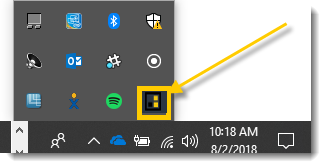
To access the Scheduler Agent options:
- Locate the PBRS/Scheduler Agent bell icon in the Windows system tray.
- Double Click the icon to open the Full Scheduler Agent or Right-click the icon to open the Scheduler Agent menu.
- Select the scheduling option you want to use.
Note: The PBRS/Scheduler Agent is available after a scheduler has been successfully configured and is running. If the Scheduler Agent icon does not appear in the Windows system tray, first confirm that the Scheduler is configured and running correctly.
Use the PBRS/Scheduler Agent menu
Right-click the PBRS/Scheduler Agent icon in the Windows system tray to access commonly used scheduler controls and PBRS monitoring tools.
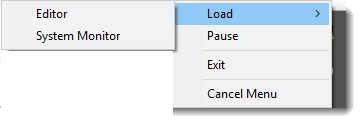
| Option | Description |
|---|---|
| Load | Opens a submenu containing PBRS tools that can be launched from the Scheduler Agent. |
| Pause | Pauses Scheduler processing. |
| Exit | Exits the PBRS/Scheduler Agent. |
| Cancel Menu | Closes the Scheduler Agent menu without performing an action. |
| Load → Editor | Opens the PBRS Editor. |
| Load → System Monitor | Opens the PBRS System Monitor. |
Pause the Scheduler
Select Pause when you need to temporarily pause Scheduler processing.
Important: While Scheduler processing is paused, schedules will not be processed normally. Remember to resume Scheduler processing when you are ready for automatic scheduling to continue.
Open the PBRS Editor
- Right-click the PBRS/Scheduler Agent icon.
- Select Load.
- Select Editor.
The PBRS Editor opens, allowing you to manage schedules and other PBRS configuration.
Open System Monitor
- Right-click the PBRS/Scheduler Agent icon.
- Select Load.
- Select System Monitor.
Use System Monitor to monitor PBRS scheduling activity and scheduler status.
Exit the Scheduler Agent
Select Exit to close the PBRS/Scheduler Agent.
Note: Cancel Menu only closes the right-click menu. It does not exit the Scheduler Agent or change Scheduler processing.
Double-click for the Full Scheduler Agent
Double-click the PBRS/Scheduler Agent bell icon in the Windows system tray to open the Full Scheduler Agent. The Full Scheduler Agent provides access to additional scheduler controls, status information, and management options beyond those available from the right-click menu.
Open the Full Scheduler Agent
- Locate the PBRS/Scheduler Agent red and white bell icon in the Windows system tray.
- Double-click the icon.
- The Full Scheduler Agent opens.
- Use the available options to review or manage Scheduler activity.
| Action | Result |
|---|---|
| Right-click the Scheduler Agent icon | Opens the quick-access menu for common Scheduler Agent commands. |
| Double-click the Scheduler Agent icon | Opens the Full Scheduler Agent with additional scheduler information and controls. |
The full Scheduler Agent is also available within PBRS on the right-hand side of the screen (after you click System).
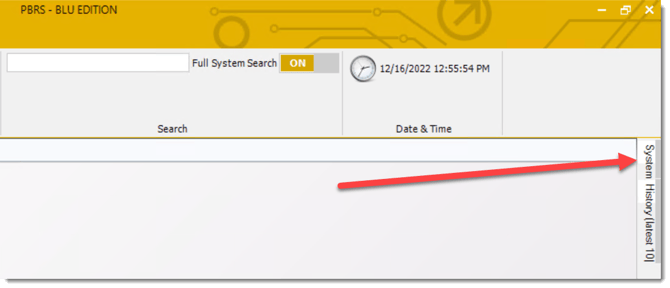
- The Full Scheduler Agent opens.
- Use the available controls to search for PBRS items and review Scheduler information and history.
| Area | Description |
|---|---|
| System | Opens the Scheduler |
| System History (latest 10) | Opens the System History panel showing the latest Scheduler history entries. |
View Scheduler system status
The System area of the Full Scheduler Agent provides a quick view of the current Scheduler status and the PBRS environment in which it is running. You can also use the controls in this area to stop or start Scheduler processing.
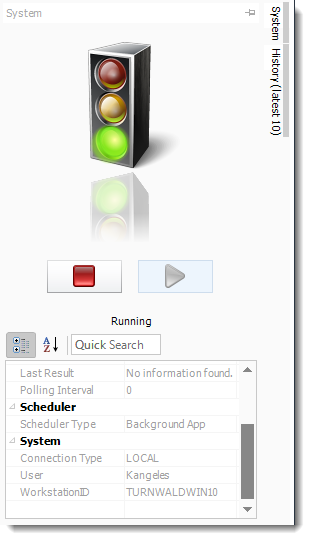
| Setting | Description |
|---|---|
| Status indicator | Provides a visual indication of the current Scheduler status. |
| Running | Displays the current Scheduler operating status. |
| Stop button | Stops Scheduler processing. |
| Start button | Starts Scheduler processing when it is stopped. |
| Last Result | Displays information about the most recent Scheduler result, where available. |
| Polling Interval | Displays the current Scheduler polling interval. |
| Scheduler Type | Identifies the scheduling method currently being used, such as Background App. |
| Connection Type | Identifies the connection type used by the PBRS environment. |
| User | Displays the Windows user associated with the current environment. |
| WorkstationID | Identifies the workstation on which the Scheduler Agent is running. |
Start and stop Scheduler processing
Use the Scheduler Agent controls to start or stop Scheduler processing:
- Select the Stop button to stop Scheduler processing.
- Confirm that the Scheduler status changes from Running.
- When you are ready to resume automatic schedule processing, select the Start button.
- Confirm that the status returns to Running.
Important: Stopping Scheduler processing prevents PBRS from automatically processing schedules. Remember to start the Scheduler again when you are ready for automatic scheduling to resume.
Troubleshooting
If the PBRS Scheduler does not start or schedules do not execute automatically as expected, check the following common issues.
The Windows Service Scheduler does not start
Confirm that Use Windows Service (advanced users on Windows NT, 2000 or later) (recommended) is selected under Options → Scheduler.
Verify the Domain\User Name and Windows Password configured under Windows Service Logon Credentials.
Confirm that the Windows account has the permissions required to run the service and access the resources used by PBRS schedules.
After correcting the configuration, select Apply Setting, and then select Start Service again.
The background scheduler stops running
The background scheduling application runs within the logged-in Windows user session. If the user logs off or the server shuts down, the background scheduler stops and PBRS cannot automatically process schedules using this method.
Restart the background scheduling application and confirm that the Scheduler is running.
If scheduling must continue when no user is logged in, configure PBRS to use the Windows Service Scheduler instead.
Schedules do not execute automatically
Confirm that:
- A scheduler is configured and running.
- The individual schedule is enabled.
- The schedule's date, time, and recurrence settings are correct.
- The schedule is not disabled.
- Scheduler blackout times are not preventing execution.
- The server date, time, and time zone are correct.
- The Scheduler's polling settings are appropriate for the schedule.
Allow an enabled test schedule to reach its configured execution time and confirm that the Scheduler detects and processes it automatically.
Note: Selecting Execute confirms that an individual schedule can run manually. It does not confirm that the Scheduler is detecting and processing schedules automatically.
Schedules execute manually but not automatically
If a schedule works when you select Execute but does not execute at its scheduled time, focus troubleshooting on the Scheduler rather than the report configuration.
Confirm that the Scheduler is running, the schedule is enabled, the scheduling time is correct, and no blackout period is active.
The Scheduler Agent icon does not appear
The PBRS/Scheduler Agent red and white bell icon appears in the Windows system tray when the Scheduler is running.
If the icon is not visible:
- Confirm that a scheduler has been successfully configured.
- Confirm that the Scheduler is running.
- Check the Windows system tray hidden icons area.
- If you are using the background scheduling application, confirm that the Windows user session is still active.
The Full Scheduler Agent shows that the Scheduler is not running
Double-click the PBRS/Scheduler Agent icon to open the Full Scheduler Agent and review the Scheduler status.
If the Scheduler is stopped, use the Start control to restart Scheduler processing. Confirm that the status changes to Running before relying on automatic scheduling.
Schedules are delayed
Review the Standard and Event-Based settings under Polling Intervals. Longer polling intervals can increase the amount of time before PBRS detects schedules or Event-Based conditions that are ready to process.
Also review the server workload, multithreading configuration, and database-condition pre-check settings.
Scheduler performance is poor
Review Polling Intervals, database pre-check connections, and Multi-Threading together.
Increasing polling frequency, database connections, or the number of threads can increase the workload on the PBRS server and connected systems. A higher value does not necessarily result in better performance.
Adjust these settings based on the available CPU, memory, database, network, and report-processing resources.
Database-based conditions are slow to evaluate
If Pre-check database conditions using up to is enabled, review the configured number of database connections.
Confirm that the PBRS server can connect to the required databases and that the databases themselves are responding normally.
Increasing the number of connections may allow more conditions to be checked concurrently, but it can also increase database workload.
Schedules do not run during certain times
Check whether Use Blackout times for the scheduler is enabled.
Review the configured Scheduler Blackout Times and confirm that the schedule's expected execution time does not fall within a blackout period.
For detailed configuration instructions, see How to Configure Scheduler Blackout Times in PBRS.
Failover does not work as expected
If this server is configured using Use as a backup scheduler server (Failover), review the failover configuration and confirm that both the primary and backup scheduler environments are configured correctly.
For complete configuration and troubleshooting instructions, see your dedicated How to Configure Scheduler Failover in PBRS.
The Windows Service starts but schedules cannot access resources
Confirm that the Windows account configured under Windows Service Logon Credentials has access to all resources required by the schedule.
Depending on the schedule, this may include report sources, databases, network folders, files, printers, and delivery destinations.
A schedule that works when executed interactively under one Windows user may fail when processed by the Windows Service if the service account does not have equivalent access.
Check the Error Log
Check the Error Log
If the cause of the problem is not immediately apparent, check the PBRS Error Log for errors associated with Scheduler or schedule execution.
Review the error details, correct the affected Scheduler or schedule configuration, and test again.
If the problem continues
Recheck the scheduling method, Scheduler status, Windows Service credentials, schedule configuration, polling settings, blackout times, and access to required resources. After making changes, verify automatic scheduling again using an enabled test schedule.
If you need further assistance, Submit a Support Request and our Support team will help you troubleshoot the issue.