![CSS-CMYK-logo-2015-2.png]](https://go.christiansteven.com/hs-fs/hubfs/social-suggested-images/CSS-CMYK-logo-2015-2.png?height=40&name=CSS-CMYK-logo-2015-2.png)
Applies to
This article applies to the following report types:
- Power BI reports and dashboards in Power BI Service
- Power BI paginated reports in Power BI Service
- Power BI reports and dashboards in Power BI Report Server
- Power BI paginated reports in Power BI Report Server
- SQL Server Reporting Services (SSRS) reports
Before you begin
Before configuring an Email destination, make sure PBRS is configured to send email and that you have the recipient information required for the schedule.
Make sure you have:
- The email address of each recipient who should receive the report.
- Access to any PBRS Address Book contacts or groups you want to use as recipients.
- The required report output format and delivery requirements for the schedule.
- A working email configuration in PBRS.
Add an Email destination
- In the PBRS Schedule Wizard, select Destinations.
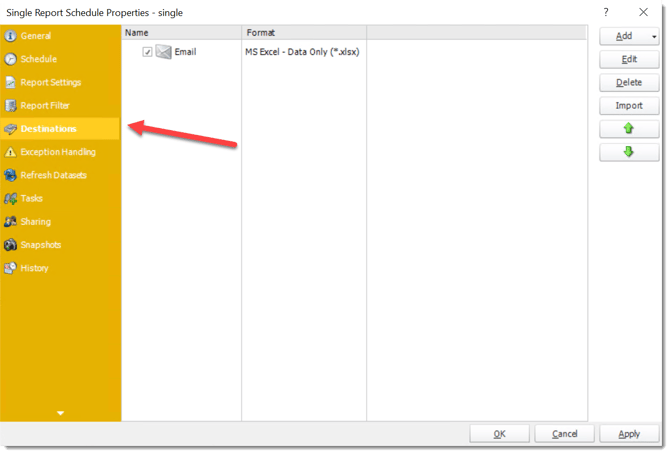
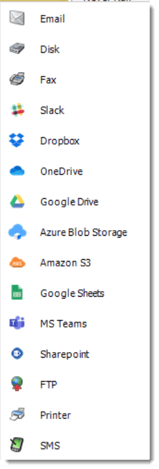
- Select Add, and then select Email.
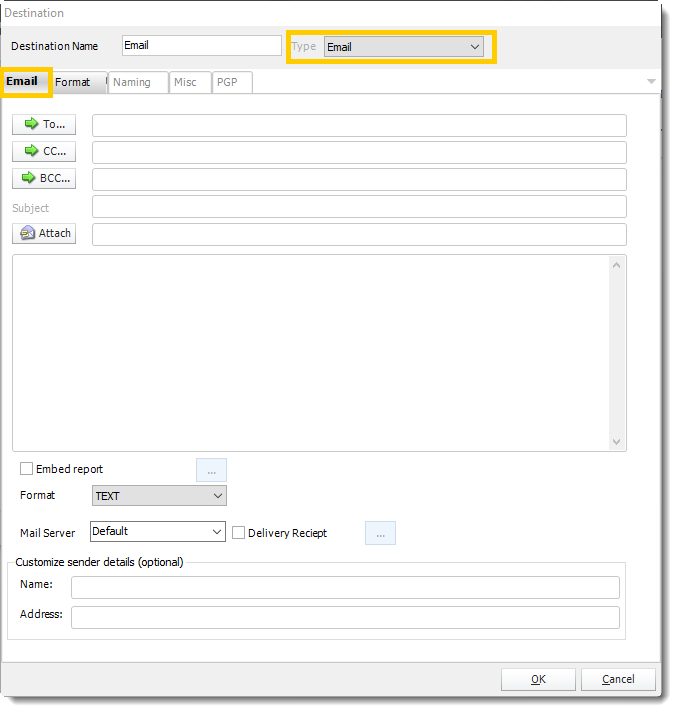
- The Email Destination window opens. Use this window to configure the recipients and email delivery options for the report.
Add email recipients
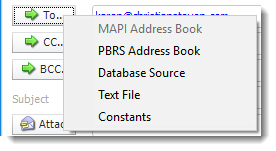
Add the recipients who should receive the scheduled report. You can enter email addresses directly, select recipients from the PBRS Address Book, retrieve recipients from a database source or text file, or use PBRS constants.
- In the Email Destination window, select the method you want to use to specify the email recipients.
- Add recipients to the To, CC, or BCC fields as required.
- Depending on your recipient source, enter an email address directly or select recipients from the PBRS Address Book, a database source, a text file, or PBRS constants.
- Confirm that all required recipients have been added before continuing.
Configure the email message
Configure the email message that PBRS sends to the recipients. You can define the sender, subject, and message body and use PBRS constants to dynamically populate supported fields.
- Enter or select the email address that should appear as the sender.
- In Subject, enter the subject line for the email.
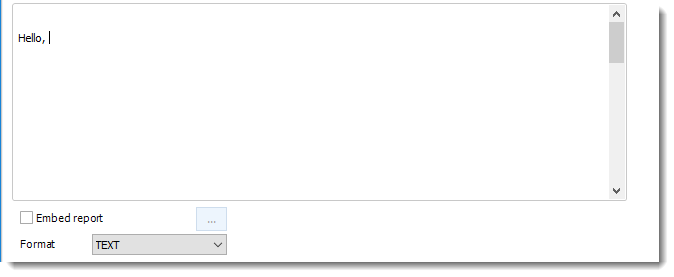
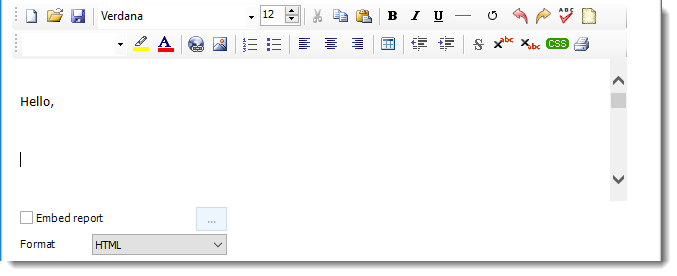
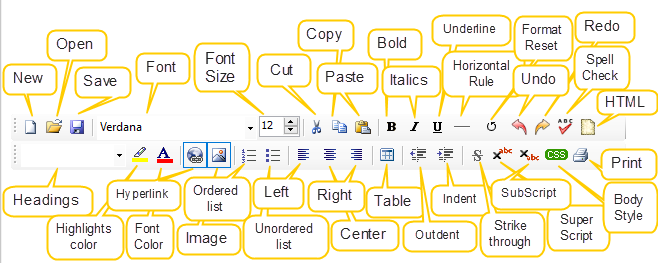
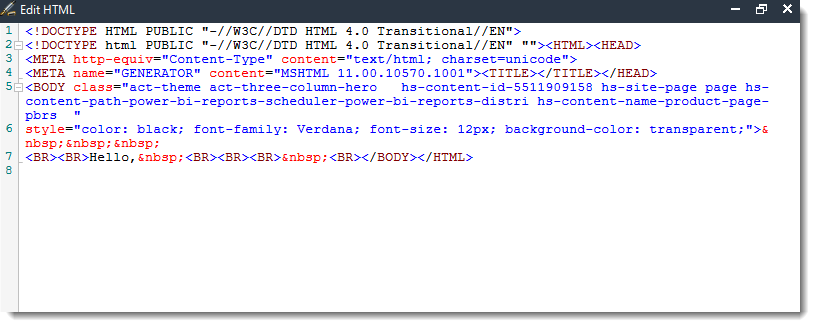
- Enter the content you want recipients to see in the email body. Use the formatting toolbar to format text, add links or images, create lists, and apply other formatting as required.
- In Format, select the format for the email body, HTML or Text.
- Where supported, insert PBRS constants to dynamically populate information when the schedule executes.
- Review the email message and confirm that the sender, subject, and message content are correct.
Customize sender details
PBRS allows you to customize the sender details for an Email destination. However, many mail servers enforce security policies that prevent messages from being sent using a sender address that is different from the authenticated email account.
If you use Customize sender details and the email is not delivered, your mail server's security or anti-spoofing policies may be preventing the message from being sent.
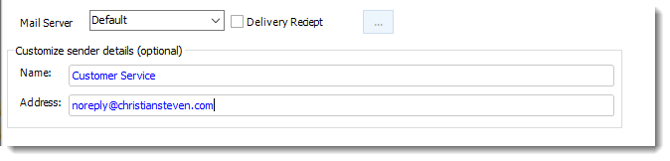
Recommended: Instead of customizing the sender details, configure the email accounts or SMTP servers you want PBRS to use. You can then select the appropriate mail server from the schedule.
For instructions, see How to Add Multiple SMTP Servers for Use by PBRS Schedules.
Configure report delivery
Embed the report in the email body
By default, PBRS delivers the exported report as an attachment to the email. You can instead embed supported report output directly in the email body. When using MAPI messaging you can only embed reports in Text format. To embed reports in HTML format you will need to change your messaging type to SMTP.
Select Embed report to include the report output directly in the email body. The available embedded formats depend on the report type.
| Report type | Available embedded formats |
|---|---|
| Power BI reports and dashboards | Image |
| Power BI Service paginated reports | Image |
| SSRS reports | Text, HTML, Image, Web Archive |
| Power BI paginated reports on-premises | Text, HTML, Image, Web Archive |
In Format, select one of the available embedded formats for your report type.
Add an AI summary to the email
PBRS can use AI to generate a summary of the report and include the summary in the email body. This allows recipients to review key information from the report directly in the email before opening the attached report.
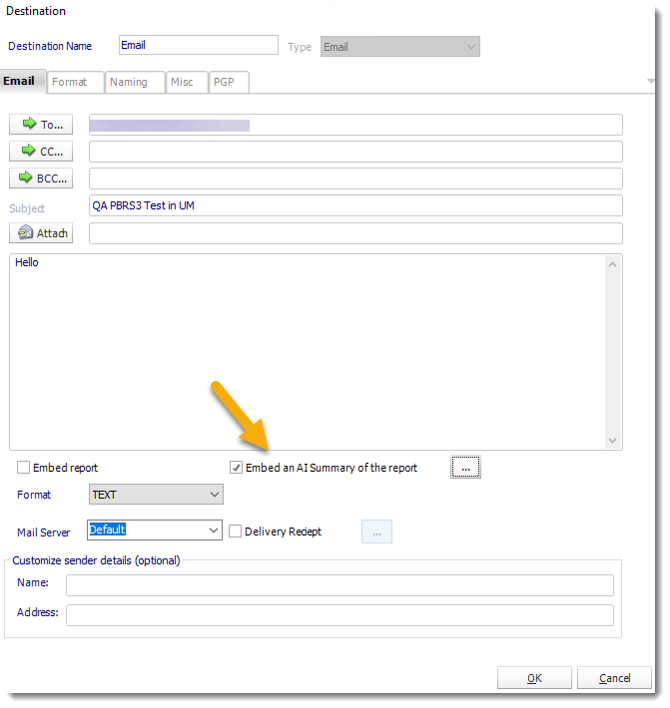
- Select Embed AI Summary to include an AI-generated summary of the report in the email body.
- Open the AI Summary Options to configure how PBRS generates the summary.
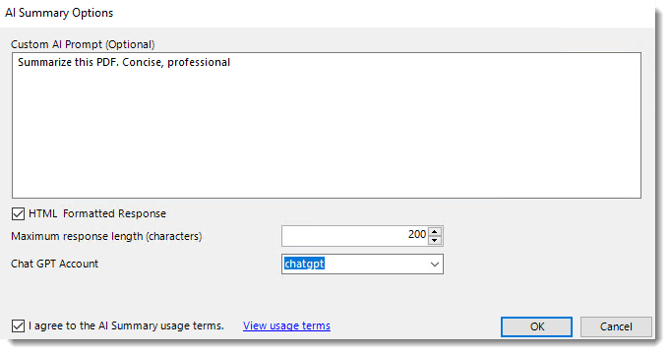
- Configure the AI summary options for the report.
Option Description Custom AI Prompt (Optional) Enter instructions that tell AI how you want the report summarized. For example, you can request a concise, professional summary. HTML Formatted Response Select this option to allow the AI-generated summary to use HTML formatting in the email body. Maximum response length (characters) Specify the maximum number of characters PBRS should allow in the generated summary. Chat GPT Account Select the ChatGPT account PBRS should use to generate the report summary. I agree to the AI Summary usage terms Select this option after reviewing and accepting the AI Summary usage terms. This is required before using the feature. - In Custom AI Prompt (Optional), enter instructions describing how you want the report summarized. If you don't need additional instructions, leave this field blank.
- Select HTML Formatted Response if you want the generated summary to include HTML formatting.
- Set the Maximum response length (characters) for the summary.
- In Chat GPT Account, select the account PBRS should use to generate the summary.
- Review the AI Summary usage terms, and then select I agree to the AI Summary usage terms.
- Select OK to save the AI Summary options.
Configure report format and naming
After selecting the Email destination, configure the format and file naming options for the report output.
Note: The report output Format determines the file format of the report attached to the email. The Format option under Embed report determines how the report is displayed within the email body.
Format: Select the output format in which PBRS should export the report. The selected format determines the type of report file attached to the email.
For details about the available export formats and their settings, see Configure Report Output Formats in PBRS.
Naming: Configure how PBRS should name the exported report file. Use the available naming options and PBRS constants to create static or dynamic file names as required.
For details about report file naming options, see Configure Report File Naming in PBRS.
Add additional attachments
Use the Attachments option to add other files that should be delivered with the email. These attachments are additional to the report output generated by the schedule. Web addresses can be attached as well.
Note: Additional attachments are separate from the report output. By default, PBRS attaches the exported report to the email based on the report Format and Naming settings.
- Select Attachments to configure additional files for the email.
- Add the files you want PBRS to include with the email.
- Review the attachment list and confirm that the required files have been added.
Save and verify the Email destination
Save the Email destination and then execute the schedule to verify that PBRS successfully delivers the report to the intended recipients.
- Review the Email destination settings and confirm that the recipients, email message, report delivery options, Format, and Naming settings are correct.
- Select OK to save the Email destination.
- Complete and save the schedule configuration.
- Select Execute to run the schedule.
- Confirm that the email is delivered to the intended recipients.
- Verify that the report is attached to the email or embedded in the email body as configured.
- If you configured an AI summary, confirm that the summary appears in the email body as expected.
- If you configured additional attachments, confirm that those files are included in the email.
If the email is not delivered or the schedule encounters an error, check the PBRS Error Log for information about the failure.
Troubleshooting
If PBRS does not deliver the email or the report is not delivered as expected, check the following common issues.
The email is not delivered
Confirm that the recipient email addresses are correct and that PBRS is configured to send email. Select Execute to run the schedule again and check the PBRS Error Log for information about any delivery failures.
If Customize sender details is enabled, your mail server may be rejecting the customized sender address. Disable the option and execute the schedule again or use a configured email account or SMTP server instead.
One or more recipients do not receive the email
Verify the recipients configured in the To, CC, and BCC fields. If recipients are supplied by the PBRS Address Book, a database source, a text file, or PBRS constants, confirm that the recipient source returns the expected email addresses.
The report is not attached to the email
Confirm that the report output Format is configured correctly. By default, PBRS delivers the exported report as an attachment unless the report is configured to be embedded in the email body.
The embedded report does not appear correctly
Confirm that Embed report is selected and that the selected embedded Format is supported for the report type.
Power BI reports, dashboards, and Power BI Service paginated reports support Image for embedded output. SSRS and on-premises paginated reports support Text, HTML, Image, and Web Archive.
The AI summary does not appear
Confirm that Embed AI Summary is enabled, a Chat GPT Account is selected, and the AI Summary usage terms have been accepted. Check the PBRS Error Log if the summary is not generated when the schedule executes.
An additional attachment is missing
Review the files configured under Attachments and confirm that PBRS can access each file when the schedule executes.