
Before You Begin
Before configuring PBRS Collaboration, make sure:
- You have more than one PBRS installation. Collaboration requires a Primary PBRS server and at least one additional PBRS installation to act as a Collaborator.
- Each PBRS server is accessible across your internal network.
- The PBRS API is configured on all servers participating in Collaboration.
- The Primary PBRS database has been migrated to your own SQL Server instance.
- Each Collaborator is connected to the Primary Scheduler's database.
- Each Collaborator has the required email, database, system, report, and delivery configuration necessary to process the schedules assigned to it.
- The applicable configuration on each Collaborator is consistent with the Primary Scheduler where required for successful schedule processing and delivery.
Important: Collaboration depends on configuration across multiple PBRS installations. Verify the server, database, API, network, and delivery configuration before assigning production schedules to Collaborator servers.
Understand the PBRS Collaboration Architecture
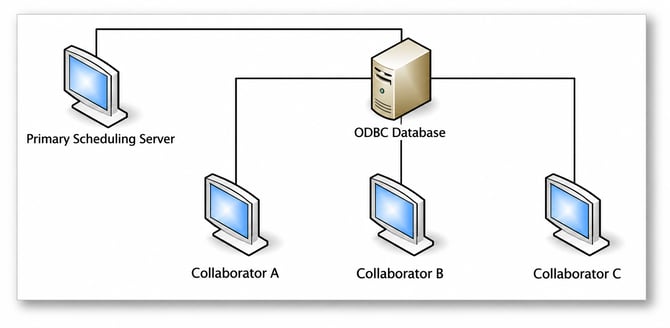
PBRS Collaboration uses a Primary Scheduling Server, a shared database, and one or more Collaborator servers to distribute schedule processing.
Use separate collaborator servers for delegated work. Keep server collaboration disabled on the failover server and leave it out of the collaboration ring.
In a collaboration environment:
- The Primary Scheduling Server is used to manage and configure the PBRS schedules.
- The ODBC Database provides the shared PBRS database used by the collaboration environment.
- Collaborator servers connect to the shared environment and process schedules assigned to them.
- Multiple Collaborator servers can be configured to distribute the schedule-processing workload.
Important: Collaborator servers must be able to access the resources required by the schedules they process, including reports, accounts, connections, and destinations.
Understand Collaboration Execution Capacity
Execution capacity depends on the thread settings and resources available on each participating PBRS server.
Do not assume that each Collaborator provides a fixed number of processing threads. The number of schedules that can be processed concurrently depends on the configuration and available resources of the servers participating in Collaboration.
Before configuring Collaboration, confirm the processing capacity and thread settings of the current PBRS environment.
Important: Adding Collaborator servers can provide additional processing resources, but actual execution capacity depends on the configuration and resources available on each server.
Collaboration Requirements
Before adding a Collaborator server, confirm the following requirements:
- Two or more PBRS installations are required.
- Each PBRS server must be accessible to the other participating servers through the internal network.
- The PBRS API service must be installed, configured, running, and reachable on every participating server.
- The Primary Scheduling Server database must be hosted in the organization's SQL Server environment.
- Every Collaborator server must connect to the Primary Scheduling Server's PBRS database.
- Email, database, reporting-account, and system settings required by assigned schedules must be configured correctly on every Collaborator server.
- The Windows credentials used during setup must have read and write access to the remote PBRS server and its configuration share.
For instructions on configuring the API service on each server, see Manage the PBRS API Service and API Clients.
Open Collaboration
- Open PBRS.
- From the main menu, select the System tab.
- Select Collaboration.
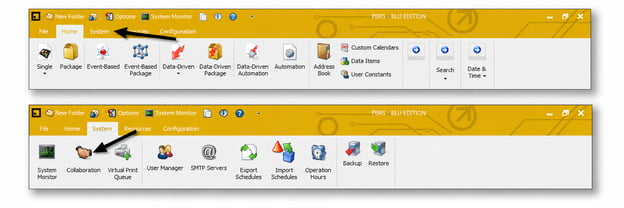
- The Collaboration window opens.
Enable Server Collaboration
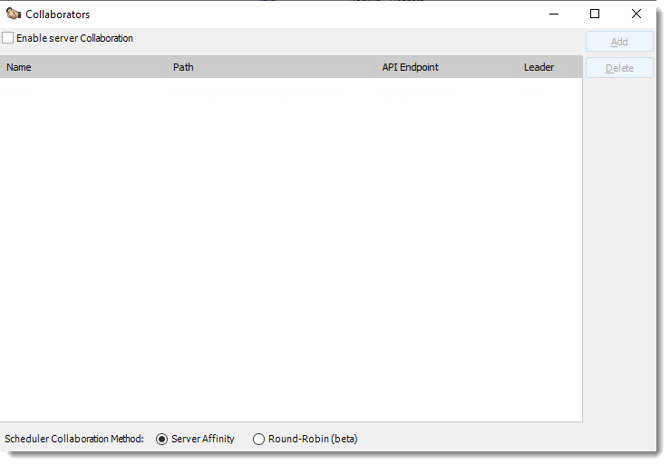
The Collaborators window is used to enable Collaboration, add and manage Collaborator servers, and select how PBRS assigns schedules across the collaboration environment.
- Check Enable server Collaboration.
- The Add option becomes available, allowing you to add a Collaborator server.
- Configured Collaborators are displayed in the main list.
The Collaborator list contains the following information:
- Name — The name assigned to the Collaborator.
- Path — The configured path to the Collaborator.
- API Endpoint — The API endpoint PBRS uses to communicate with the Collaborator.
- Leader — Indicates the Collaborator's leader status within the collaboration configuration.
The Delete option can be used to remove a selected Collaborator from the configuration.
Select the Scheduler Collaboration Method
At the bottom of the Collaborators window, select how PBRS should distribute schedule processing between Collaborator servers.
Two methods are available:
Server Affinity
Select Server Affinity when schedules should be associated with a specific Collaborator server.
With Server Affinity, the server assignment determines which Collaborator is responsible for processing the schedule. This provides more direct control over where particular schedules are executed.
This can be useful when schedules depend on resources or configuration available on a particular Collaborator.
Round-Robin (beta)
Distributes schedule processing between the available Collaborator servers using a round-robin method.
Add a Collaboration Server
After enabling server Collaboration, add the PBRS installation that will act as a Collaborator.
- In the Collaborators window, select Add.
- The Collaboration Server window opens.
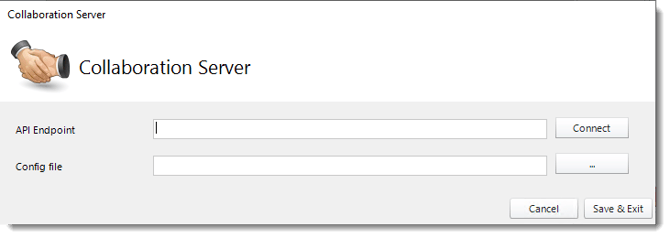
- Enter the API Endpoint for the PBRS installation that will act as the Collaborator.
- After entering the endpoint, select Connect to establish the connection.
PBRS connects to the remote Collaboration Server and displays the next stage of the configuration.
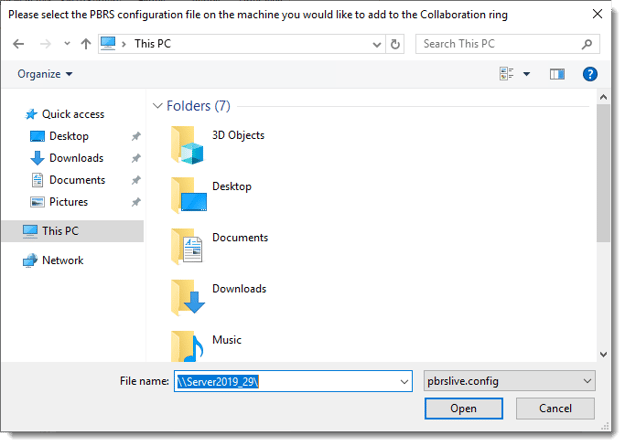
Select the Collaborator Configuration File
After you select Connect, PBRS opens a file browser and prompts you to select the PBRS configuration file on the server you want to add to the Collaboration ring.
- Browse to the remote PBRS server.
- Navigate to the PBRS configuration share for that server.
- Locate and select pbrslive.config.
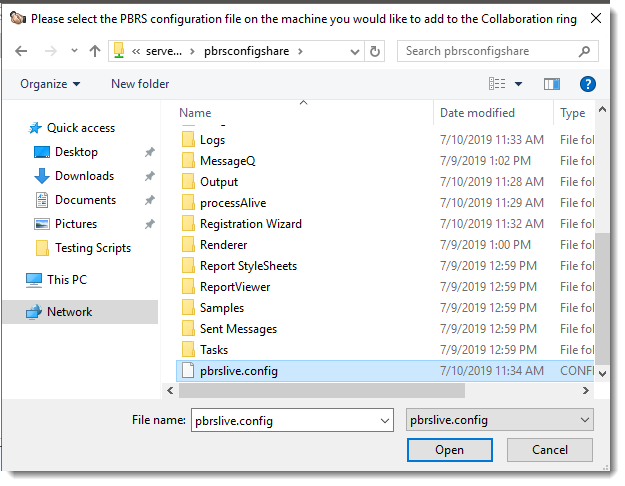
- Select Open.
- PBRS returns you to the Collaboration Server window with the configuration file information populated.
- Review the API Endpoint and Config file information to confirm that the correct Collaborator server has been selected.
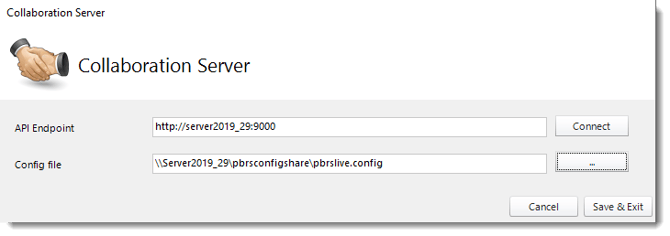
- Select Save & Exit to add the server to the Collaboration configuration.
Important: The Windows credentials being used must have sufficient read and write access to the remote PBRS server and its configuration share. If you cannot browse to or select pbrslive.config, verify the network connection, share permissions, and Windows permissions.
Confirm the Collaborator Server
After selecting the remote server's pbrslive.config file, PBRS displays a confirmation message explaining the changes that will be made to the remote server.
When a server is added to the Collaboration group:
- The server will no longer process its own local schedules.
- It connects to the Primary PBRS database.
- It processes schedules assigned to it through Collaboration.
- The PBRS Editor and Scheduler running on the remote server are terminated as part of the change.
- Review the server name displayed in the confirmation message and verify that you are adding the correct PBRS server.
- Review the changes that will be made to the remote server.
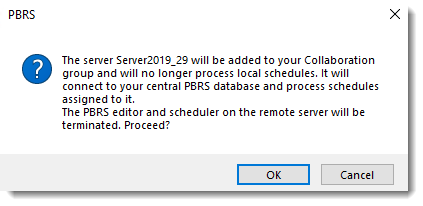
- Select OK to proceed.
- Select Cancel if you do not want to add the server to the Collaboration group.
Important: Adding a PBRS server as a Collaborator changes how that installation operates. Any local schedules on the Collaborator will no longer be processed locally while the server participates in the Collaboration group.
Authenticate with the Remote Server
After confirming that you want to add the server to the Collaboration group, PBRS prompts for Windows credentials with read and write access to the remote server.
- Enter the Username for a Windows account that has read and write access to the remote PBRS server.
- Enter the account Password.
- If required, enter the Windows Domain. This field is optional.
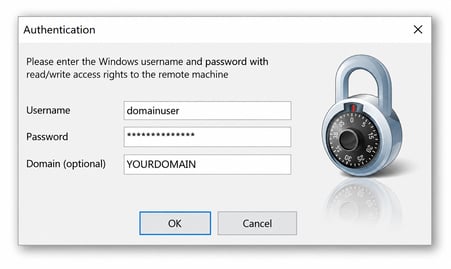
- Select OK.
- PBRS uses these credentials to access and configure the remote server for Collaboration.
The fields are:
- Username — Windows account with the required permissions on the remote server.
- Password — Password for the Windows account.
- Domain (optional) — Windows domain associated with the account, where applicable.
Important: The account must have sufficient read and write permissions to the remote PBRS server and the resources PBRS needs to configure Collaboration. If authentication fails, verify the username, password, domain, network access, and permissions before trying again.
Verify the Collaborator Was Added
After PBRS authenticates with the remote server and completes the configuration, the Collaborators window displays the newly added server.
- Confirm that the Collaborator appears in the server list.
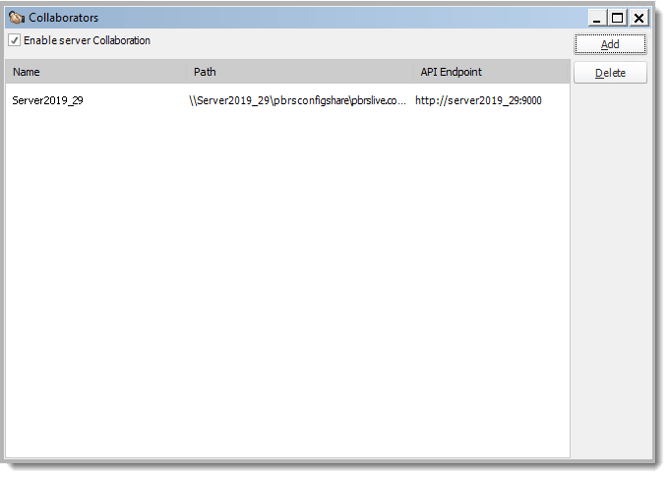
- Review the information displayed for the Collaborator:
- Name — The name of the remote PBRS server.
- Path — The path to the remote server's PBRS configuration file.
- API Endpoint — The PBRS API endpoint used to communicate with the Collaborator.
- Confirm that Enable server Collaboration remains checked.
- If the information is incorrect, select the Collaborator and use Delete to remove it before configuring it again.
- Repeat the Add process if additional Collaborator servers need to be configured.
Important: At this stage, the remote server has joined the Collaboration group and no longer processes its own local schedules. It connects to the Primary PBRS database and processes schedules assigned to it through Collaboration.
Use Collaboration with PBRS Schedules
After Collaboration has been configured and the Collaborator servers are available, PBRS can use those servers to process schedules.
How the processing server is determined depends on the Scheduler Collaboration Method selected for the environment.
Using Server Affinity
When Server Affinity is selected, you can specify which Collaboration server should process an individual schedule.
- Open the properties of the schedule you want to configure.
- Select Schedule.
- Locate Collaboration server affinity.
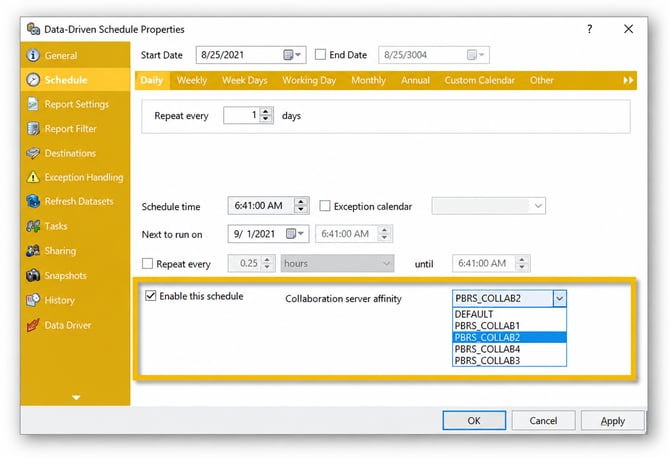
- Open the drop-down list.
- Select the Collaboration server that should process the schedule.
- Select Apply or OK to save the change.
The available Collaborator servers are displayed in the drop-down list.
Example: If a Collaboration environment contains several servers, Server Affinity can be used to direct a particular schedule to the server selected in its Collaboration server affinity setting.
Round-Robin: Use this option when schedules can run on any available participating server. PBRS distributes due schedules among available servers and does not use the server-affinity selection from the Schedule Wizard.
Run a Schedule on a Collaborator Server
After Collaboration has been configured, you can manually execute a schedule on a specific Collaborator server. This is useful for testing the Collaboration configuration or confirming that a particular Collaborator can successfully process a schedule.
- From the PBRS main screen, locate the schedule you want to run.
- Right-click the schedule.
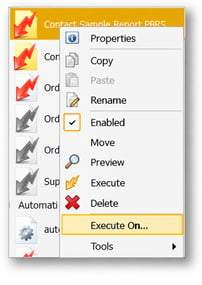
- Select Execute On....
- Select the Collaborator server on which you want the schedule to execute.
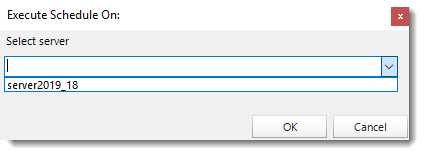
- PBRS sends the schedule to the selected Collaborator server for processing.
- Verify that the schedule executes and produces the expected output.
Important: To manually execute a schedule on a Collaborator server using Execute On..., enable Use the Process Watcher for manual executions in Options > General > User Experience. See Configure the General Options in PBRS for more information.
Configure the General Options in PBRS
Note: The servers available through Execute On... are determined by the Collaborator servers configured in the PBRS Collaboration environment.
Tip: After initially configuring a Collaborator, use Execute On... with a test schedule to confirm that the server can access the required reports, accounts, database connections, and destinations before relying on it for production processing.
Troubleshooting
PBRS Reports That Collaboration Requires the PBRS API
Possible cause:
The PBRS API service is not installed, configured, running, or reachable on one or more servers participating in Collaboration.
Resolution:
- Confirm that the PBRS API service is installed on every participating PBRS server.
- Confirm that the service is running on each server.
- Verify that the API endpoint for each server can be reached by the other participating servers.
- Confirm that the required API Clients are configured.
- Check firewall and network access to the configured API port.
- Restart the PBRS API service if necessary and reopen Collaboration.
For detailed API configuration instructions, see Manage the PBRS API Service and API Clients.
Unable to Add a Collaborator Server
Possible cause:
The Primary Scheduling Server cannot access the remote Collaborator, its API endpoint, or its PBRS configuration share.
Resolution:
- Confirm that the remote server is accessible over the internal network.
- Verify the API Endpoint entered for the Collaborator.
- Confirm that the PBRS API service is running on the remote server.
- Confirm that the remote pbrslive.config file can be accessed.
- Verify that the Windows account used during setup has read and write access to the remote PBRS server and its configuration share.
- Check firewall and network rules between the participating servers.
- Retry the Add process after correcting any connection or permission issues.
Authentication Fails When Adding a Collaborator
Possible cause:
The Windows credentials supplied during setup are incorrect or do not have sufficient permissions on the remote server.
Resolution:
- Re-enter the Windows Username and Password.
- Enter the correct Domain where required.
- Confirm that the account has read and write access to the remote server.
- Confirm that the account can access the PBRS configuration share.
- Test access to the remote server using the same Windows account before attempting to add the Collaborator again.
The Collaborator Cannot Connect to the Primary PBRS Database
Possible cause:
The Collaborator cannot access the Primary Scheduling Server's PBRS database, or the database connection is not configured correctly.
Resolution:
- Confirm that the Primary PBRS database is hosted in the organization's SQL Server environment.
- Confirm that the Collaborator server can communicate with the SQL Server.
- Verify the PBRS database connection from the Collaborator.
- Check the database credentials and permissions.
- Confirm that network and firewall rules allow communication between the Collaborator and database server.
A Collaborator Appears More Than Once
Possible cause:
The Collaboration configuration may contain duplicate or obsolete server registrations.
Resolution:
- Open System > Collaboration.
- Review the configured Collaborator servers.
- Confirm that each participating server appears only once.
- Remove incorrect or obsolete Collaborator entries where appropriate.
- Verify the Name, Path, and API Endpoint for each configured server.
- Reopen the affected schedule and review the Collaboration server affinity list.
Note: If duplicate servers continue to appear after reviewing the Collaboration configuration, record the PBRS build number and contact ChristianSteven Support.
The Collaborator Is Added but the Configuration Does Not Appear Correct
Possible cause:
The remote server may not have completed the Collaboration configuration correctly.
Resolution:
- Open System > Collaboration on the Primary Scheduling Server.
- Confirm that the Collaborator appears in the list.
- Verify its Name, Path, and API Endpoint.
- Confirm that Enable server Collaboration remains checked.
- Confirm that the PBRS API service is running on the Collaborator.
- Confirm that the Collaborator is connected to the Primary PBRS database.
- Use Execute On... with a controlled test schedule to verify communication with the Collaborator.
Need Additional Help?
If you cannot add a Collaborator, authenticate with the remote server, connect to the Primary PBRS database, or establish communication between the participating PBRS servers, check the PBRS Error Log for additional information.
Before contacting ChristianSteven Support, collect the PBRS build number for each participating server, the Primary Scheduling Server and Collaborator configuration, the configured API endpoints, whether the PBRS API service is running on each server, whether pbrslive.config can be accessed, whether the Collaborator can connect to the Primary PBRS database, and the exact error message displayed during setup.
Include relevant screenshots with sensitive information removed.
Related Articles
The following articles provide additional information about the PBRS components and configuration used with Collaboration:
- PBRS Installation Prerequisites — Review the system requirements before installing an additional PBRS instance for use as a Collaborator.
- Install PBRS — Learn how to install PBRS on an additional server.
- Configure the PBRS Database — Learn how to configure the PBRS database used by the Collaboration environment.
- Activate PBRS — Learn how to activate an additional PBRS installation.
- Manage the PBRS API Service and API Clients — Configure the PBRS API service and API Clients required for communication between participating Collaboration servers.
- Configure the General Options in PBRS — Configure general PBRS settings, including Use the Process Watcher for manual executions, which is required when manually executing schedules on Collaborator servers using Execute On....