

Power BI Report Automation API Comparison
Compare Power BI Report Automation APIs

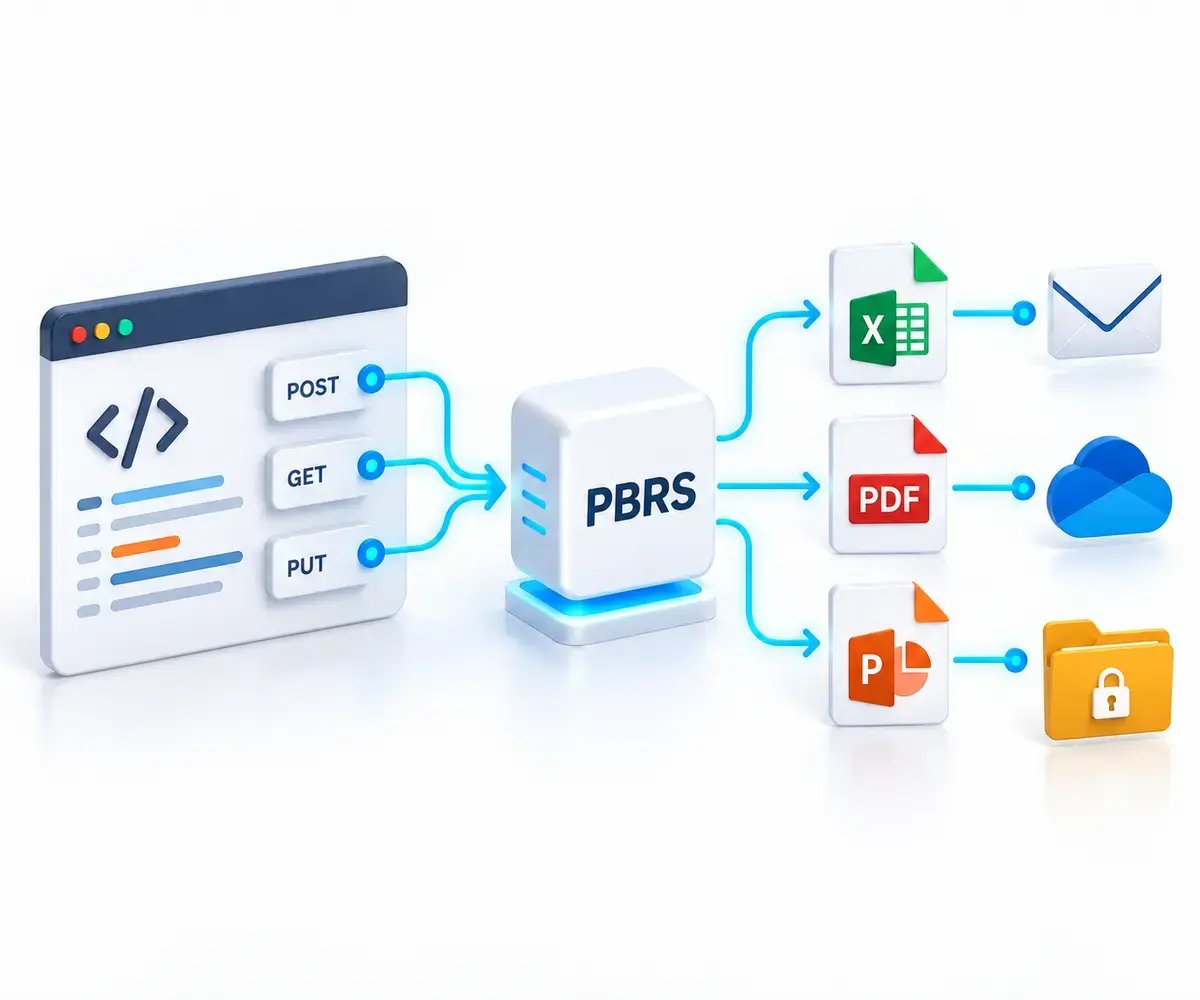
Give your application a reporting engine for personalized schedules, complete report packages and automated delivery. The PBRS REST API connects your business logic to reporting workflows across Power BI, paginated reports, SSRS and Power BI Report Server.
| ✓ | Create and update reporting schedules from your application. |
| ✓ | Personalize report content, outputs and email recipients using supported API settings. |
| ✓ | Build report packages across supported Microsoft reporting sources. |
| ✓ | Trigger execution from your workflow and monitor processing through the API. |
Compare PBRS with native Power BI APIs, Power Automate, PowerBI Robots, Inforiver and BI Helper to find the right approach for your application's reporting requirements.
The Reporting Integration Challenge
When Your Application Needs More Than an Export Call
The real work starts when every customer needs different reports, several reporting systems must work together, and delivery becomes part of your business process. These are the requirements that make a dedicated reporting engine worth integrating.
Personalized Customer Deliveries
Each customer or business unit needs its own report selection, filters, recipients and delivery schedule. PBRS lets your application configure supported reporting settings and use data-driven packages to process recipient-specific requirements.
Reports Across Multiple Sources
A complete delivery may include Power BI reports, paginated statements and existing SSRS outputs. PBRS brings supported cloud and on-premises reports into coordinated package workflows, helping you use the reporting assets you already have.
Growing Workflow Maintenance
Export scripts and automation flows accumulate scheduling, file-handling and delivery logic as requirements grow. Let PBRS run your configured reporting workflows so your developers can focus on your application’s business logic.
Choosing Your Reporting Integration
Compare Your Report Automation Options
Compare the reporting work each approach leaves with your team. PBRS brings schedule management, personalized report packages, execution and configured delivery into a reporting engine your application can control.
| Option | What Your Team Needs to Account For | Why Choose PBRS |
|---|---|---|
| Native Power BI APIs | Your application must coordinate exports with scheduling, recipient processing, package assembly and delivery. Ordinary-report ExportToFile requires Premium, Embedded or Fabric capacity and does not support PPU. Microsoft export documentation. | Integrate a reporting engine with scheduling and delivery built in. Create and manage supported schedules, run report packages and monitor execution through PBRS. |
| Power Automate | Build and maintain the actions, loops and connectors needed for your reporting process. Personalized packages add file collection, grouping, processing and routing to the export workflow. Microsoft flow example. | Reduce reporting-specific workflow maintenance. Let PBRS generate, personalize, assemble and deliver configured report packages while your application controls when the work begins. |
| PowerBI Robots | Provides playlist automation and an API. For its Report Server option, the published documentation lists restrictions on authenticated reports, filters, bookmarks and page selection. Report Server restrictions. | Bring existing server-based reports into your integration. PBRS documents dedicated SSRS and Power BI Report Server schedule operations alongside Power BI Service and paginated reporting. |
| Inforiver | Provides scheduling, bursting and formatted Excel/PDF output. Its published scheduler page states that the described workflow supports Inforiver visuals, excluding native Power BI and other third-party visuals. Scheduler coverage. | Automate your existing Microsoft reporting environment. Use supported Power BI reports, paginated reports, SSRS and Report Server assets without adopting Inforiver visuals as a scheduling requirement. |
| BI Helper | Provides cloud-based distribution and job-management APIs. Its documented setup starts with a job created in the user interface; subsequent jobs can be cloned and managed through the API. API setup requirements. | Run the reporting service within your own environment. PBRS provides API operations to create supported schedules and manage packages across cloud and on-premises Microsoft reporting sources. |
Choose PBRS for Complex Reporting Workflows
Put Personalized Report Delivery Behind Your Application
PBRS is built for applications that need recurring schedules, recipient-specific content and complete report packages across Microsoft reporting sources. Keep your application focused on business rules while PBRS handles the configured reporting work.
Based on the linked vendor documentation reviewed September 20, 2026. Microsoft paginated-report export has different format and licensing rules from ordinary-report export. PBRS API operations vary by report source and schedule type; desktop features do not automatically have an equivalent public API operation.
Compare the Integration Work
PBRS API vs Native Power BI APIs
Microsoft provides APIs for exporting Power BI reports. PBRS adds application-controlled reporting schedules, packages and configured delivery. Compare what each approach means for the reporting workflow your developers must maintain.
Native Power BI APIs
Build Around the Export Operations
Request and retrieve report files
Submit an export request, poll its status and retrieve the completed file. Apply supported filters, bookmarks or effective identities to ordinary reports, and parameters to paginated reports.
Supply the surrounding workflow
The export operation produces a file. Your application or other services must coordinate recurring execution, recipient processing, package assembly and delivery.
Plan for report-specific requirements
Ordinary-report ExportToFile requires Premium, Embedded or Fabric capacity and does not support PPU. Paginated export has different format options and limited PPU support.
Microsoft ordinary-report export documentation
Microsoft paginated-report export documentation
PBRS REST API
Hand Reporting Workflows to PBRS
Create persistent reporting schedules
Save recurrence, report settings and supported destinations in PBRS. Your application can update the schedule or trigger it when needed.
Configure personalized report packages
Let PBRS assemble and deliver configured report packages instead of writing your own export, file-collection and recipient-processing logic.
Operate across Microsoft reporting sources
Use one PBRS installation to coordinate supported Power BI, paginated, SSRS and Power BI Report Server schedules.
Explore the PBRS REST API
See schedule creation and update operations
Choose PBRS when your application needs recurring, personalized report delivery and you want to reduce the reporting infrastructure your developers must maintain.
PBRS runs within your Windows environment. Available API operations, formats and authentication options depend on the reporting source and schedule type. Your application retains responsibility for user authorization and business rules.
Compare Reporting Workflow Maintenance
PBRS API vs Power Automate
Power Automate connects actions into flows. The PBRS REST API connects your application to a dedicated reporting engine. As recipient rules and report packages become more complex, the difference is how much reporting logic your team must build and maintain.
Power Automate
Assemble the Reporting Process in Flows
Connect export and delivery actions
Configure a trigger, export the report and pass the resulting file to an email or storage action. Your flow defines how these steps work together.
Extend the flow for each reporting requirement
Recipient-specific reports and multi-report packages can require loops, filters, file collection, grouping and additional processing actions. Your team maintains those connections as requirements change.
Configure reporting-specific recovery
Power Automate provides execution history and error-handling mechanisms. Your team still decides how the flow should respond when one export fails, a package is incomplete or a delivery needs to be repeated.
PBRS REST API
Delegate the Reporting Process to PBRS
Configure a saved reporting workflow
Configure the reporting process in PBRS, then trigger it from your application without rebuilding the export-and-delivery sequence in a flow.
Use reporting-specific package operations
Use supported package and recipient-grouping operations to reduce the loops and file-handling steps your team maintains.
Track reporting execution from your backend
Retrieve execution status, schedule history and queue activity so your application can track the reporting work delegated to PBRS.
Choose PBRS when maintaining recipient loops, report-package assembly and delivery logic is taking development time away from your application.
Power Automate is a workflow platform rather than a directly equivalent reporting API. PBRS API coverage varies by report source and schedule type; confirm the operations required for your integration.
Compare API Operations and Reporting Sources
PBRS API vs PowerBI Robots API
Both products provide APIs for configuring and running reporting jobs. For applications serving a mixed Microsoft reporting environment, the deciding questions are which sources the integration supports and how it handles recipient-specific report packages.
PowerBI Robots API
Manage Reporting Through Playlists
Create, change and execute playlists
The API includes playlist creation, editing, recurrence, enablement, execution and deletion. It also provides playlist details and execution history.
Manage recipients and filters
Dedicated endpoints manage playlist recipients and update filters for individual recipients. These operations support application-controlled personalization.
Account for Report Server restrictions
Its published Report Server documentation requires anonymously accessible report URLs and lists restrictions on filters, slicers, bookmarks and selecting pages beyond the default report page.
PowerBI Robots API reference
Documented Report Server restrictions
PBRS REST API
Coordinate Cloud and Server-Based Reporting
Configure schedules by reporting source
Use documented, source-specific operations to create and update schedules across Power BI Service, paginated reports, SSRS and Power BI Report Server.
Configure recipient-specific packages
Combine supported reports into customer-specific packages, using data-driven processing and recipient grouping to control each delivery.
Integrate existing SSRS and Report Server assets
Keep existing server-based reports in your application’s reporting workflow, with dedicated guidance for connections, parameters and schedule operations.
PBRS API capabilities
SSRS and Power BI Report Server integration
Choose PBRS when your application needs to coordinate personalized report packages across Power BI and existing SSRS or Power BI Report Server environments.
PowerBI Robots details refer to its published v2 API and Report Server documentation. PBRS operations, authentication options and output settings vary by report source and schedule type.
Compare Job Creation and Deployment
PBRS API vs BI Helper API
Both products provide APIs for managing reporting jobs. PBRS offers a clear fit when your application needs to create reporting schedules, coordinate cloud and server-based reports, and run the reporting service within your own infrastructure.
BI Helper API
Extend a Cloud-Based Reporting Service
Start with a job configured in the interface
BI Helper's API documentation requires an initial job created through its user interface. After that setup, applications can clone jobs and use API operations to manage their reporting configuration.
Configure and operate reporting jobs
Its API includes report configuration, filter and email settings, execution, pause and activation controls, deletion and execution history. API access is documented for Premium and Enterprise plans.
Use the vendor-hosted service
BI Helper provides browser-based report distribution without requiring customers to install reporting servers. Your integration uses the service's hosted API and job-processing environment.
BI Helper API setup and licensing
BI Helper job-management operations
PBRS REST API
Control Reporting Within Your Environment
Create supported schedules through the API
Once PBRS and its reporting connections are configured, create supported schedules directly through the API, including recurrence, report settings and destinations.
Coordinate mixed-source report packages
Bring supported Power BI, paginated, SSRS and Report Server outputs into configured packages for each customer or business unit.
Run the API on your PBRS server
Host the PBRS API as a Windows service in your environment. Your backend connects to your installation to manage schedules and track execution.
PBRS schedule creation and updates
PBRS API deployment and capabilities
Choose PBRS when your application needs control over reporting schedules and personalized packages across Power BI, SSRS and Report Server within your own infrastructure.
PBRS requires a configured Windows installation and network access from your application. Available operations and output settings depend on the reporting source and schedule type.
Compare Reporting Coverage for Your Integration
PBRS vs Inforiver: Reporting Coverage
Start with the reports your application must deliver. PBRS provides documented API operations across Power BI, paginated reports, SSRS and Power BI Report Server, making it a strong choice for integrating your existing Microsoft reporting environment.
Inforiver Scheduler
Reporting Built Around Inforiver Visuals
Scheduling and personalized distribution
Inforiver documents recurring schedules, recipient-specific filters and bookmarks, formatted PDF and Excel outputs, and delivery to email and shared destinations.
Visual coverage affects report compatibility
Its published scheduler page describes support for Inforiver Matrix/Enterprise and Analytics+ visuals. That page explicitly excludes native Power BI and other third-party visuals from the described workflow.
Check Compatibility with Your Existing Reports
If your delivery includes native Power BI visuals, other third-party visuals, SSRS or Power BI Report Server reports, the documented Inforiver scheduler workflow does not establish coverage for that mix. PBRS provides documented API operations across these Microsoft reporting sources.
PBRS REST API
Integrate Your Existing Microsoft Reports
Create and update schedules programmatically
Configure supported report settings, recurrence and destinations through documented PBRS API operations.
Coordinate reports across supported sources
Use your existing Power BI, paginated, SSRS and Power BI Report Server reports without requiring Inforiver visuals.
Start execution and inspect the outcome
Trigger saved schedules from your backend and track processing through status, history and queue operations.
Explore PBRS API operations
Review schedule creation and update examples
Choose PBRS when your application needs documented scheduling, package and execution operations across the Microsoft reports your organization already uses.
Inforiver details describe its published scheduler coverage, not a complete inventory of its API endpoints. PBRS API operations and rendering options vary by report source and schedule type.
Supported Reporting Sources
One API for Your Microsoft Reporting Environment
PBRS gives application teams a consistent way to work with supported cloud and on-premises Microsoft reporting sources. It can provide the reporting automation layer behind your Power BI report automation workflow.
Power BI Service
Work with supported Power BI reports and configured reporting accounts.
Power BI Paginated Reports
Configure supported parameter-driven paginated report workflows.
SQL Server Reporting Services
Include supported SSRS reports in schedules and report packages.
Power BI Report Server
Bring supported on-premises report-server workflows into the same reporting process.
Available API operations, output formats and authentication requirements depend on the PBRS version, report source and deployment configuration.
Build on Reporting Experience
Reporting Automation Built for Long-Term Use
ChristianSteven Software has focused on automated business reporting for more than two decades. PBRS gives your application a supported reporting automation layer while you retain ownership of your product experience and business logic.
20+
Years of Reporting Automation
Deep experience with the operational details behind recurring business reporting.
API
Documentation for Developers
Explore API reference material and implementation guides before you build.
PBRS
Support for Your Reporting Workflow
Test your use case, validate the right configuration and bring technical questions to the PBRS team.
Power BI Report Automation API Comparison FAQ
Questions About Choosing a Power BI Report Automation API
Compare reporting-source coverage, application control and the development work each approach requires. Find out when PBRS is the right choice for personalized schedules, complete report packages and automated delivery.
Choose PBRS when your application needs recurring schedules, personalized report packages and configured delivery. Microsoft’s export APIs provide report files; your team supplies the surrounding workflow. PBRS provides documented operations for managing schedules, configuring supported packages, starting execution and monitoring results, reducing the reporting infrastructure your developers must maintain.
PBRS is a strong fit when reporting flows have become difficult to maintain because of recipient loops, multiple exports, package assembly and delivery rules. Your application can configure and start supported PBRS workflows while PBRS performs the reporting work. Power Automate remains available for other business processes.
Both provide operations for configuring and executing reporting jobs. PBRS is particularly relevant when your application must coordinate Power BI with existing SSRS and Power BI Report Server reports. Its API documents source-specific schedules, packages and data-driven processing. PowerBI Robots’ published Report Server documentation lists restrictions involving authentication, filtering and page selection that buyers should assess against their reports.
BI Helper documents initial job creation through its interface, followed by API-based cloning, configuration and execution. Once PBRS and its reporting connections are configured, your application can create supported schedules through source-specific API operations. PBRS also runs within your Windows environment and supports packages across Power BI, paginated reports, SSRS and Report Server.
Check both report compatibility and the API operations your application requires. Inforiver’s published scheduler page describes scheduling for Inforiver visuals and excludes native Power BI and other third-party visuals from that workflow. Separately verify its API coverage for your intended integration. PBRS documents schedule creation, updates, package processing, execution and monitoring across supported Microsoft reporting sources.
Yes. Supported data-driven package operations let you configure recipient-specific processing and group reports for delivery. This is useful when each customer, account or business unit needs a different collection of reports with its own filters, parameters and delivery instructions. Available settings depend on the report sources and package configuration.
It can do both. PBRS documents creation and update operations for supported Power BI Service, paginated, SSRS and Power BI Report Server schedules. Your backend can configure the schedule and later start it through an execution operation. Reporting connections, permissions and the PBRS API service must already be configured.
No. Your application retains its interface, user authentication, authorization and business rules. Its backend communicates with PBRS to manage supported reporting workflows. Keep PBRS credentials and privileged API requests on the server side, and validate which reports and data each user may access.
The PBRS API runs as a Windows service on your PBRS server. Your application connects to that service, and PBRS uses the reporting accounts and destinations configured in your installation. This suits organizations that want to operate the reporting service within their own infrastructure.
Test a representative workflow using your actual report sources, recipient rules, output formats and delivery requirements. Include schedule creation or updates, package execution and result monitoring. Compare the custom code and operational work each approach requires. A PBRS trial or technical demonstration can help establish whether the required workflow fits before you commit.
Put PBRS to the Test
See PBRS Handle Your Reporting Requirements

Bring your report sources, recipient rules and delivery requirements. See how PBRS can handle your application's reporting workflow and evaluate how much custom development it could replace.
✓ Free 30-day trial ✓ No credit card required ✓ Test your reporting workflow